Visitors arrive expecting Istanbul to be difficult to get around, usually because of the traffic, and then discover that the traffic is entirely beside the point. You are not going to be in it. The rail and ferry network goes almost everywhere a visitor wants to be, it is cheap, and the whole thing is unlocked by a single plastic card that costs less than a coffee.
What follows is the shape of the system rather than a timetable. Fares and opening hours move — frequently — so we deliberately do not quote numbers that will be wrong in three months.
The short version
- First thing
- Buy an İstanbulkart at any station machine. One card, all transport.
- Old city
- The T1 tram. Sultanahmet, Eminönü, Karaköy, Kabataş, all on one line.
- Crossing the strait
- Ferry if you have twenty minutes, Marmaray if you have four.
- Taksim
- F1 funicular from Kabataş, about two minutes uphill.
- After midnight
- Very little rail. Taxi or a night bus.
The İstanbulkart, and why you get one immediately
İstanbulkart is a rechargeable travel card, and it is the only sensible way to pay for anything that moves. It works on the metro, the trams, the buses, the metrobüs, the funiculars, Marmaray and the public ferries — one card, every mode.
Buy it from a vending machine at any metro or tram station. The machines take cash and cards, switch to English, and sell you the card and a first top-up in the same transaction. Two adults can share one card by tapping twice, which is worth knowing if you land late and only find one machine working.
Two things make it worth more than the convenience:
- Fares are substantially lower with the card than the single-use tickets sold at some stations, and some barriers no longer take anything else.
- Transfers are discounted. Change from tram to funicular to metro within a couple of hours and each subsequent tap costs less than the first. A journey with two changes is not three fares.
Top it up more than you think you need. The single most common visitor problem in this city is standing at a barrier with an empty card and a queue behind you. Machines are at every station, but not always at the ferry pier you happen to be leaving from.
The T1 tram: the one line that matters
If you learn nothing else about this network, learn the T1. It runs from Bağcılar in the west to Kabataş on the Bosphorus, and on the way it collects, in order, essentially every historic thing you came to see: Beyazıt for the Grand Bazaar, Sultanahmet for the Blue Mosque and Hagia Sophia, Sirkeci, Eminönü for the Spice Bazaar and the ferry piers, then over the Galata Bridge to Karaköy, Tophane and Kabataş.
Trams are frequent, they run on their own right of way for most of the route, and they are immune to the traffic. They are also crowded at almost all hours, which is the price of being that useful.
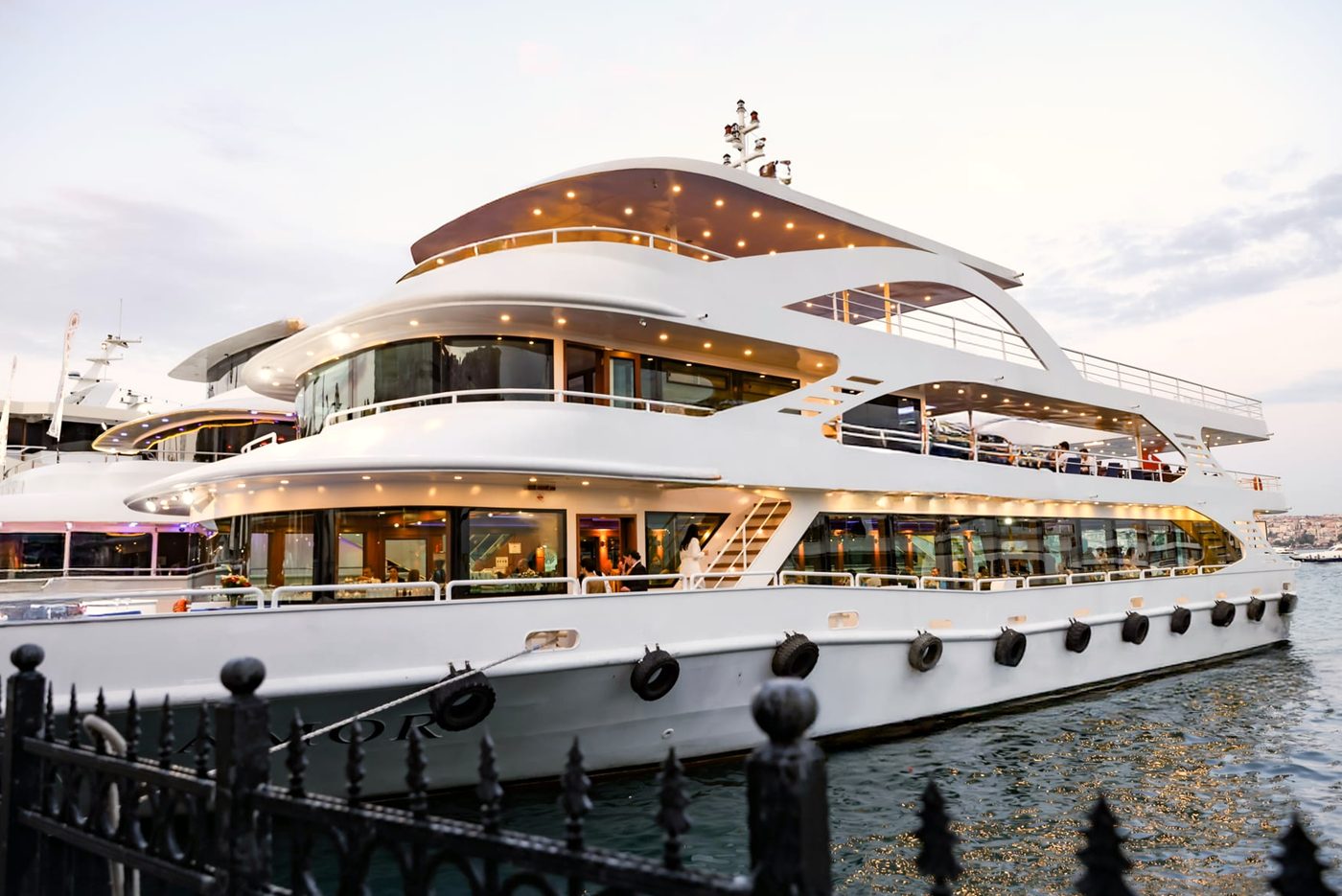
Kabataş is the eastern end of the line, and it is where a great deal converges: the tram terminus, the funicular up to Taksim, ferry piers, and the quay our own evening sails from — about a minute on foot from the tram stop.
Metro, funicular and the hill problem
Istanbul is not flat, and the difference between the waterfront and the ridge above it is a serious climb. The funiculars exist because of this.
F1 connects Kabataş to Taksim Square in about two minutes, running constantly. If you are staying anywhere around Taksim, Beyoğlu or İstiklal Street, this is your link to the water and to the tram.
From Taksim, the M2 metro runs north up the European side and south to Yenikapı, passing Şişhane for Galata and Vezneciler for the university quarter. Between the T1 tram along the shore and the M2 along the ridge, the European side is essentially covered.
Crossing the water: two very different options
There are two ways to get from Europe to Asia, and they are not interchangeable.
| Ferry | Marmaray | |
|---|---|---|
| Time | Around 20 minutes | Around 4 minutes |
| Route | Eminönü, Karaköy, Kabataş or Beşiktaş to Üsküdar or Kadıköy | Under the strait, Sirkeci to Üsküdar |
| View | The entire point | A tunnel |
| Use it when | You have the time and it is daylight | You are late, or it is raining sideways |
The commuter ferry is the best-value sightseeing in Istanbul and it is not close. For the price of a bus fare you cross the Bosphorus on the open deck with tea and the whole skyline, and locals treat it as ordinary transport, which it is. Do it at least once in daylight, from Eminönü or Kabataş to Kadıköy.
Marmaray is the rail tunnel under the strait — a genuine engineering marvel that you experience as four minutes of darkness. It is fast, frequent, and connects the two suburban rail networks, which makes it the practical choice for actual journeys rather than pleasure.
From the airports
Istanbul has two, they are on opposite sides of the city and opposite sides of the strait, and confusing them is an expensive mistake. Check which one your ticket says before you book anything.
Istanbul Airport (IST) — European side, far north-west
The M11 metro runs from the terminal into the city and connects to the wider metro network, which is the cheapest route in and immune to traffic. The Havaişt airport buses go directly to Taksim and other central points and are simpler with luggage, but they are on the motorway with everybody else. A taxi is the fastest at 4am and the slowest at 6pm.
Sabiha Gökçen (SAW) — Asian side, far south-east
The M4 metro now reaches the terminal and runs to Kadıköy, from where a ferry across to Kabataş or Eminönü is both the fastest and by far the nicest way to finish the journey. Havabus coaches also run to Kadıköy and Taksim.
Allow properly for either. From Sabiha Gökçen to Sultanahmet is a genuine cross-city journey, not an airport transfer.
What runs late, and what does not
This is the part that catches people out, particularly after an evening that ends at midnight.
Metro, tram and Marmaray broadly stop somewhere around midnight, with the last services earlier than you would like. The metrobüs — the articulated bus in its own lane across the city — runs through the night, and there are night bus routes, but neither is a natural fit for a visitor who does not already know the system.
In practice, after midnight you take a taxi. They are metered, they are not expensive by European standards, and using an app (BiTaksi and Uber both hail licensed taxis here) removes the negotiation and the language problem in one step. Have your hotel's address written down in Turkish.
If your evening ends at the water: our own cruise comes alongside at Kabataş between 23:45 and midnight, by which time the tram is finishing. Taxis wait at the pier, and Sultanahmet or Taksim is a short ride. If you would rather not think about it at all, the hotel transfer at €5 per person means the same driver who collected you is waiting when you step off — see how the evening runs or the evening itself.
Six things worth knowing
- Get the card at the first station you see. Everything downstream is easier.
- The tram is a map of your sightseeing. If it is on the T1, do not plan transport for it.
- Take one ferry in daylight even if you have no reason to cross. It is the best twenty minutes in the city.
- Rush hour is real and it is on the roads, not the rails. Between five and seven, choose anything that runs on a track or on water.
- Google Maps is reliable here for rail and ferry times, and optimistic for anything on a road.
- Kabataş, Eminönü and Üsküdar are hinges. Almost every sensible route through the city passes one of the three.
If you are working with a very short window in the city, the layover guide puts these lines together into a plan. And if you want to know what all those buildings along the water are while the ferry is passing them, start with the palaces.
Frequently asked
The evening itself
One departure, every night of the year. Doors at 20:00, away at 21:00, back at Kabataş between 23:45 and midnight. Dinner, the full Turkish night programme and unlimited soft drinks are in the price; you settle it on board, and you can cancel free until two hours before departure.